
Freedom of the press is usually discussed in terms of censorship, political persecution, threats against journalists, or the closing of newspapers. But there is another, quieter mechanism through which governments can influence the media: money.
Argentina offers an unusually clear example.
For decades, governments at different levels have used official government advertising — known locally as “pauta oficial” — as a significant source of revenue for newspapers, television channels, radio stations, websites, and other media outlets. In theory, official advertising exists for a legitimate purpose: governments need to inform citizens about public programs, health campaigns, administrative procedures, emergencies, elections, and other matters of public interest.
The problem begins when political authorities have broad discretion over which media receive that money, how much they receive, and when the payments stop.
At that point, advertising can cease to be simply communication between the government and the public. It can become an instrument of political influence.
Argentina’s current government, led by President Javier Milei, made the radical decision to largely suspend the use of national government advertising. The policy deserves to be examined not as a partisan gesture, but as a potentially important experiment in the relationship between government and journalism.
The problem with a government-funded press
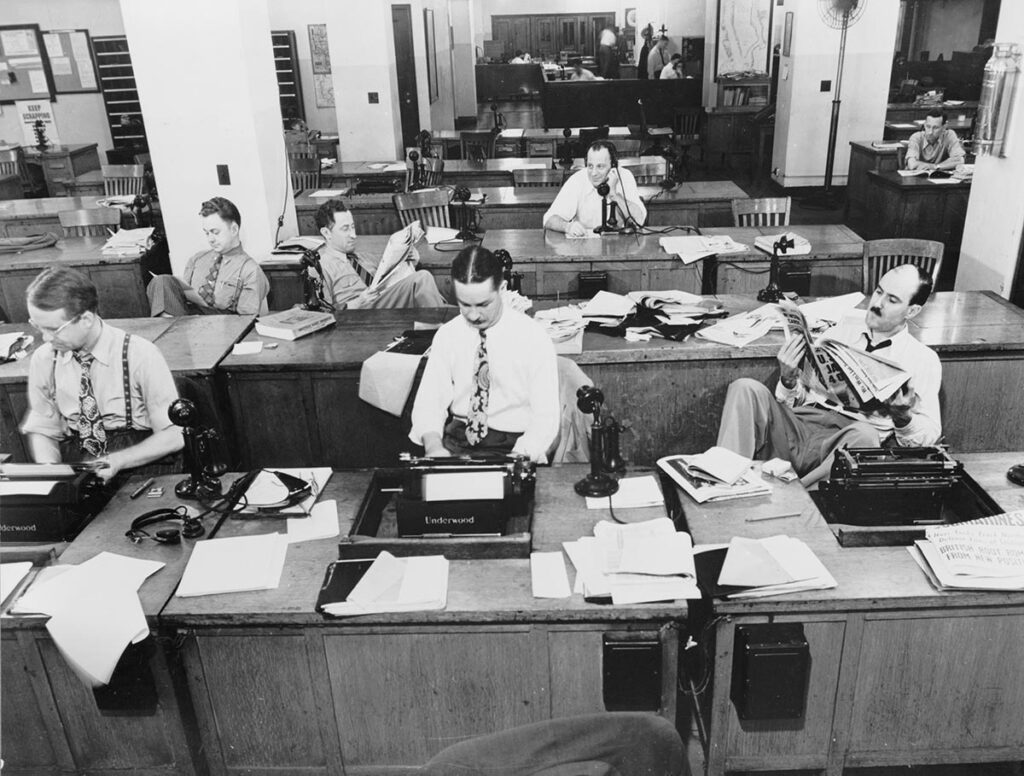
A journalist is supposed to be able to investigate the government, criticize its decisions, expose corruption, question its officials, and publish uncomfortable information without worrying about whether the government will punish the publication financially.
That independence becomes considerably more difficult when the government is also one of the publication’s customers.
Imagine a local newspaper that depends heavily on advertising contracts from the provincial government. Its journalists discover a serious problem involving the governor’s administration. The story is legitimate, important, and newsworthy.
But the owner knows that the provincial government can potentially influence whether the newspaper receives a lucrative advertising contract next month.
No direct order is necessary.
Nobody needs to call the editor and say, “Do not publish this.”
The economic incentive may be enough.
This is one of the most subtle forms of media capture because it does not necessarily look like censorship. The government does not have to shut down a newspaper. It does not have to arrest a journalist. It simply has to control an important part of the newspaper’s revenue.
Over time, this can produce something arguably even more difficult to detect: self-censorship.
Journalists may become less aggressive. Editors may decide that certain stories are “not worth the trouble.” Political criticism may become softer. Government achievements may receive prominent coverage while scandals receive less attention.
And eventually, readers may not even realize that the editorial line is being influenced.
Milei’s decision to cut national government advertising
When Javier Milei took office in December 2023, his government suspended paid institutional advertising by the central administration.
The original Decree 89/2023 established a one-year suspension of paid government advertising, while maintaining exceptions for legally required publications, emergencies, and specifically justified communication needs.
The suspension was subsequently extended. In December 2024, Resolution 7147/2024 extended it for another year, citing fiscal efficiency and the need to prioritize scarce public resources.
The policy was accompanied by a broader restructuring of the government’s communication apparatus. In 2025, the government announced the closure of the National Directorate of Official Advertising, a structure that had included five directorates, two coordinating offices and 47 employees. It also announced the cancellation of thousands of advertising purchase orders inherited from the previous administration, alleging irregularities.
There is a strong argument in favor of this decision.
If a newspaper, television channel, radio station, or website is commercially viable, it should ideally be able to survive by serving its audience rather than pleasing politicians.
The basic principle is simple:
The reader should be the customer. The government should not be the editor’s customer.
That does not mean government advertising is inherently illegitimate. Public authorities sometimes genuinely need to communicate important information. But there is a profound difference between informing citizens and financing media organizations indefinitely.
A political system built around incentives
The Argentine debate often becomes unnecessarily personal.
Supporters of one political party accuse journalists of being “bought.” Journalists accuse politicians of attacking the press. Politicians accuse media owners of political bias. Media organizations accuse governments of censorship.
But the deeper problem is structural.
The question should not be:
“Which journalists are corrupt?”
It should be:
“What incentives does the system create?”
A system in which politicians control large amounts of advertising money inevitably creates incentives for media organizations to maintain good relationships with those politicians.
This does not mean every journalist receiving government advertising is dishonest. Far from it. Thousands of professional journalists work under difficult conditions and continue doing legitimate journalism regardless of who advertises in their publication.
But institutions matter more than individual morality.
A journalist can be completely honest while working inside a business whose owners depend economically on political advertising.
That is precisely why institutional safeguards are so important.
The Buenos Aires Province example
The national government is not the only relevant case.
The same question remains highly relevant at the provincial level, particularly in Buenos Aires Province, governed by Axel Kicillof.
Data analyzed by the Argentine fact-checking organization Chequeado shows that the Buenos Aires provincial government distributed substantial amounts of official advertising to major media groups during 2025.
According to the investigation, Grupo Indalo — which controls C5N and several radio stations — received approximately 12% of Buenos Aires Province’s official advertising that year. Grupo Olmos received 6.2%, Grupo América 5.2%, and other major groups including Clarín and El Destape also appeared among the largest recipients.
The numbers are important because they demonstrate that the debate is not simply historical.
Government advertising remains a significant economic relationship between political power and the media in Argentina.
The Buenos Aires government’s own communication structure explicitly includes among its responsibilities the contracting of official advertising and maintaining relationships with media organizations.
Again, this does not prove that every recipient produces favorable journalism in exchange for advertising.
It does, however, demonstrate that a substantial financial relationship exists between the provincial government and media organizations.
And whenever that relationship exists, the question of editorial independence is legitimate.
The same problem exists at the municipal level
The issue becomes even more difficult to analyze at the municipal level.
Across Argentina, many municipalities use local advertising as part of their communication budgets. In smaller cities, the economic dependence can be particularly significant because local media markets are small.
A provincial television channel might have thousands or millions of potential viewers. A national newspaper may have multiple revenue sources. A small local radio station, website, or newspaper may have far fewer options.
For a small media outlet, losing a municipal advertising contract can represent a meaningful percentage of its income.
That creates a particularly uncomfortable dynamic.
The mayor may not need to censor the journalist.
The journalist may simply know that the mayor controls an important source of revenue.
And the mayor may know that the journalist knows it.
That is enough to distort incentives.
This is why official advertising should be treated as a media-independence issue, not merely as a question of government spending.
But there is an important counterargument
There is also a legitimate argument against simply eliminating all government advertising.
Government communication can serve an important democratic function.
Citizens need to know about vaccination campaigns, emergency warnings, public tenders, tax deadlines, missing-person alerts, elections, road closures, public health risks, and other matters.
A completely privatized information environment could also create problems, particularly for smaller media outlets that provide local information but lack the advertising market necessary to survive.
The solution, therefore, should not necessarily be “government must never communicate through private media.”
The better question is:
Under what rules can governments advertise without buying political influence?
That is where Argentina could make significant progress.
A better model for official advertising
If official advertising exists, its distribution should be governed by transparent, objective, and verifiable criteria.
Audience reach should matter.
Geographical coverage should matter.
The relevance of the publication to the target audience should matter.
The cost per person reached should matter.
And, critically, the political opinions expressed by a media organization should not determine whether it receives advertising.
The system should also publish every contract, every payment, every campaign, and the criteria used to select the media outlet.
That would make it much harder for a government to reward friendly media or punish critical ones.
Argentina’s own legal framework recognizes the danger. In a 2024 administrative decision discussing official advertising, the government cited Supreme Court precedent stating that if the state distributes advertising, it cannot manipulate it by giving or withdrawing advertising based on discriminatory criteria or use advertising indirectly to affect freedom of expression.
That principle is fundamental.
Government advertising should never become a political reward system.
The real test of press freedom
There is an interesting paradox here.
A government can claim to support freedom of the press while simultaneously maintaining a financial relationship with hundreds of media outlets.
And a government can claim to defend press freedom while attacking journalists it dislikes.
Neither position is sufficient.
True media independence means that journalists should be free to criticize everyone.
They should be able to criticize Milei.
They should be able to criticize Kicillof.
They should be able to criticize a mayor.
They should be able to criticize the opposition.
They should also be able to praise a government when it does something well.
The crucial point is that none of those editorial decisions should determine whether the government pays the media outlet.
That is the real separation that Argentina needs: a separation between political power and media revenue.
Milei’s decision to eliminate or drastically reduce national government advertising is therefore worth examining beyond the personality of Milei himself.
One does not have to support Milei’s economic policies, his rhetoric, or his political movement to recognize that reducing the government’s role as a direct source of media revenue can strengthen an important principle.
The same standard should apply to every politician.
If government advertising is problematic when a Peronist government uses it, it should be problematic when a libertarian government uses it.
If it is unacceptable for a president to financially reward friendly journalists, it should also be unacceptable for a governor or mayor.
And if the system is transparent and objective, those rules should apply regardless of who happens to be in office.
Journalism should answer to the public
The healthiest media ecosystem is one in which journalists compete for something more valuable than government contracts: the trust of their audience.
A newspaper should survive because people want to read it.
A radio station should survive because people want to listen to it.
A website should survive because people find its reporting valuable.
A television channel should survive because viewers choose it.
That does not eliminate bias. Journalism will always contain opinions, editorial philosophies, ideological differences, and human mistakes.
But it changes the fundamental incentive.
If the audience is the source of revenue, journalists have an incentive to investigate what the audience cares about.
If politicians are the source of revenue, journalists and media owners have an incentive to consider what politicians care about.
That difference matters enormously.
Argentina’s experience should therefore be understood as part of a much larger democratic question.
Who pays for the press?
The answer can determine, at least in part, who the press ultimately serves.
Government advertising can be legitimate when it is necessary, transparent, limited, and allocated according to objective rules.
But when political authorities have the power to financially reward friendly media and punish unfriendly ones, the boundary between communication and political influence becomes dangerously thin.
Argentina has taken an important step at the national level by moving away from that model.
The next challenge is consistency.
The same principles should apply in the presidential palace, in provincial capitals, and in city halls across the country.
Because press freedom is not simply the right to publish without being arrested.
It is also the ability to publish without having to wonder whether tomorrow’s government check will disappear because today’s headline made someone in power uncomfortable.
A free press should fear losing readers — not losing government advertising.